
Why the Body Only Changes When It’s Given a Reason To
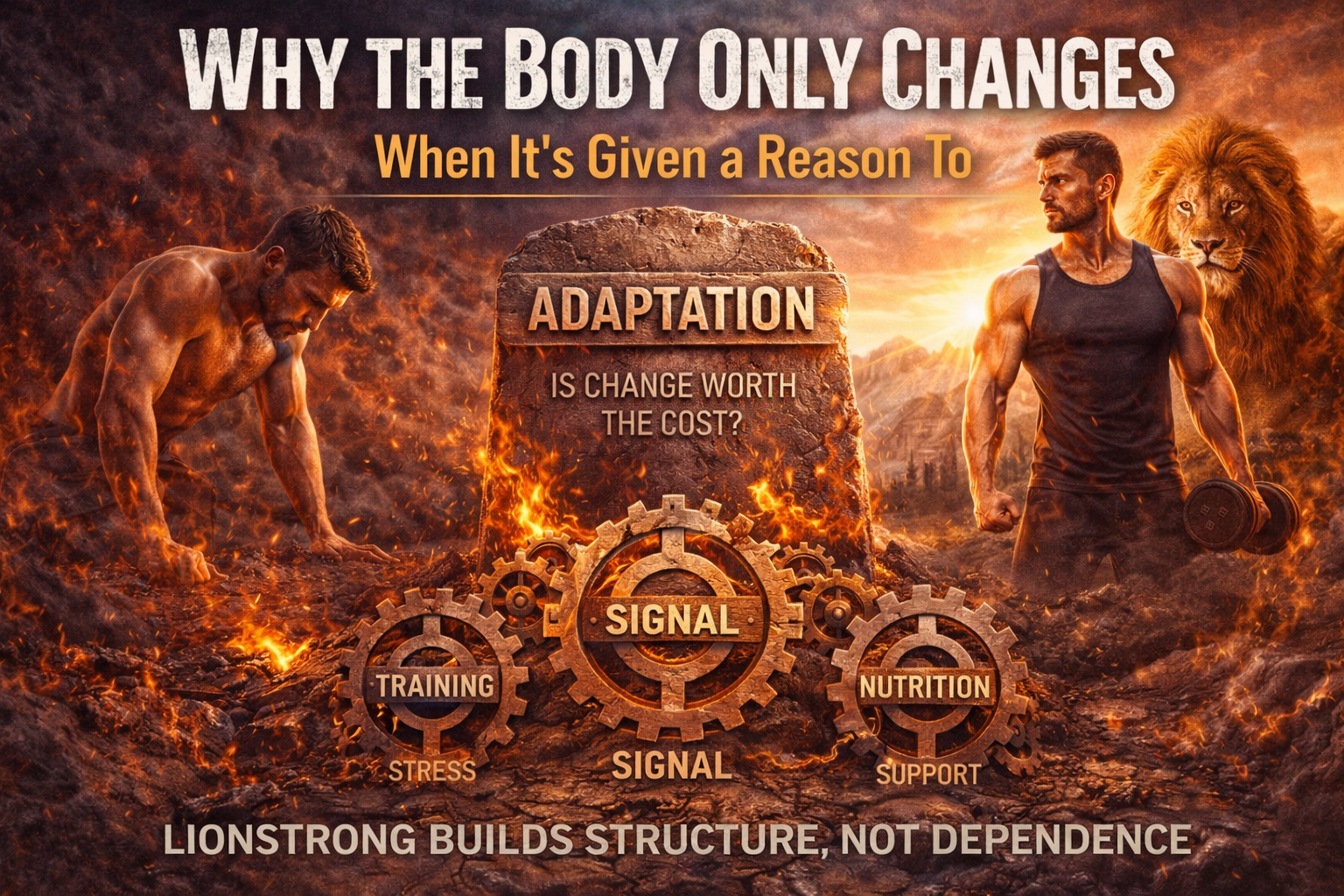
The Adaptation Misunderstanding
Most people believe the body changes because effort was applied.
They think:
if they work hard enough
sweat enough
suffer enough
…the body will respond.
But the human body does not change out of obedience.
It changes out of necessity.
The body is not impressed by effort.
It is persuaded by signals.
And until people understand what signals actually matter, progress will always feel unpredictable.
The Body Is an Economist, Not an Artist
The human body operates under one core principle:
It seeks efficiency.
It conserves energy.
It avoids unnecessary tissue.
It adapts only when adaptation reduces future cost.
Muscle is expensive tissue.
Strength is metabolically demanding.
Recovery requires resources.
So the body asks a simple question:
“Do I need to change — or can I survive as I am?”
Most training and dieting never answer that question convincingly.
Why Random Effort Rarely Produces Adaptation
Random workouts feel productive.
They create fatigue.
They create soreness.
They create exhaustion.
But fatigue is not a signal.
Soreness is not a signal.
Exhaustion is not a signal.
The body adapts to consistent, specific stress — not chaos.
When stress is:
inconsistent
excessive
poorly structured
…the body responds by:
conserving energy
lowering output
increasing injury risk
resisting change
This is why people “work hard” for years with minimal results.
The body was never convinced.
The Difference Between Stress and Signal
Stress is what you feel.
A signal is what the body interprets.
Signals are created when:
tension is sustained
effort is repeatable
recovery is predictable
demand is unavoidable
This is why Lionstrong training prioritizes:
time under tension
constant tension
controlled ranges
effort close to failure
These elements tell the body:
“This demand is not optional. Adaptation is cheaper than resistance.”
Why Comfort Is the Enemy of Change (But Pain Isn’t the Answer)
The body adapts away from comfort.
But that does not mean it adapts toward pain.
Pain is noise.
Comfort is stagnation.
Productive discomfort is the signal.
Most people oscillate between:
doing too little (comfort)
doing too much (pain)
Neither produces sustainable change.
Lionstrong lives in the middle:
high-quality stress
manageable recovery
repeatable effort
That’s where adaptation happens.
Why Muscle Growth Is a Survival Decision
Muscle does not grow because you “want it.”
It grows because the body concludes:
current capacity is insufficient
future demand will persist
adaptation is worth the cost
This is why:
sporadic training fails
dieting without resistance fails
excessive variety fails
The body sees no reason to invest.
Lionstrong training removes that ambiguity.
The signal is clear:
“This demand is recurring. Build capacity.”
Why Nutrition Is a Permission Slip, Not a Trigger
Nutrition does not cause adaptation.
It allows adaptation to occur.
Without sufficient protein and energy:
muscle breakdown exceeds synthesis
connective tissue weakens
recovery slows
signals are muted
This is why Lionstrong nutrition systems focus on:
protein anchoring
repeatable meals
metabolic support
sustainability
Nutrition doesn’t need to be extreme.
It needs to be reliable.
Reliability turns signals into results.
Why Recovery Is Part of the Signal
Recovery is not passive.
It tells the body:
stress was survived
capacity was adequate
future stress can be handled
Poor recovery sends the opposite message:
“This stress is too costly. Reduce output.”
Lionstrong training is intentionally:
intense but recoverable
demanding but sustainable
challenging without chaos
Recovery reinforces the signal instead of canceling it.
Why Most People Plateau Permanently
Plateaus are not mysterious.
They occur when:
stress becomes optional
effort becomes negotiable
recovery becomes inconsistent
nutrition becomes unreliable
The body adapts to the minimum requirement.
If the requirement never escalates — neither does the body.
Lionstrong systems are designed to:
standardize effort
remove loopholes
expose weakness
demand progression
The body adapts because it must.
Why Adaptation Requires Structure, Not Intensity
Intensity without structure is intimidation.
Structure without intensity is stagnation.
Adaptation requires both — applied intelligently.
This is why Lionstrong is not a collection of workouts.
It is a decision architecture:
how effort is applied
how stress is managed
how recovery is earned
how nutrition supports demand
This removes guesswork and replaces it with inevitability.
The Long-Term Consequence of Training Without Reason
Bodies that were never given a reason to adapt:
lose muscle quickly
lose joint tolerance
lose metabolic flexibility
age faster
Bodies that were given consistent, intelligent signals:
remain resilient
maintain strength
tolerate stress
age slower
Training is not about aesthetics.
It is about teaching the body what it must maintain.
Final Thought: Adaptation Is Earned, Not Hoped For
The body does not change because you try.
It changes because the cost of staying the same becomes too high.
Lionstrong systems are designed to raise that cost — intelligently, safely, and sustainably.
Not through punishment.
Not through chaos.
But through unavoidable, repeatable demand.
That is how bodies change.
And that is how they stay changed.