
Why Consistency Is a System Problem — Not a Motivation Problem
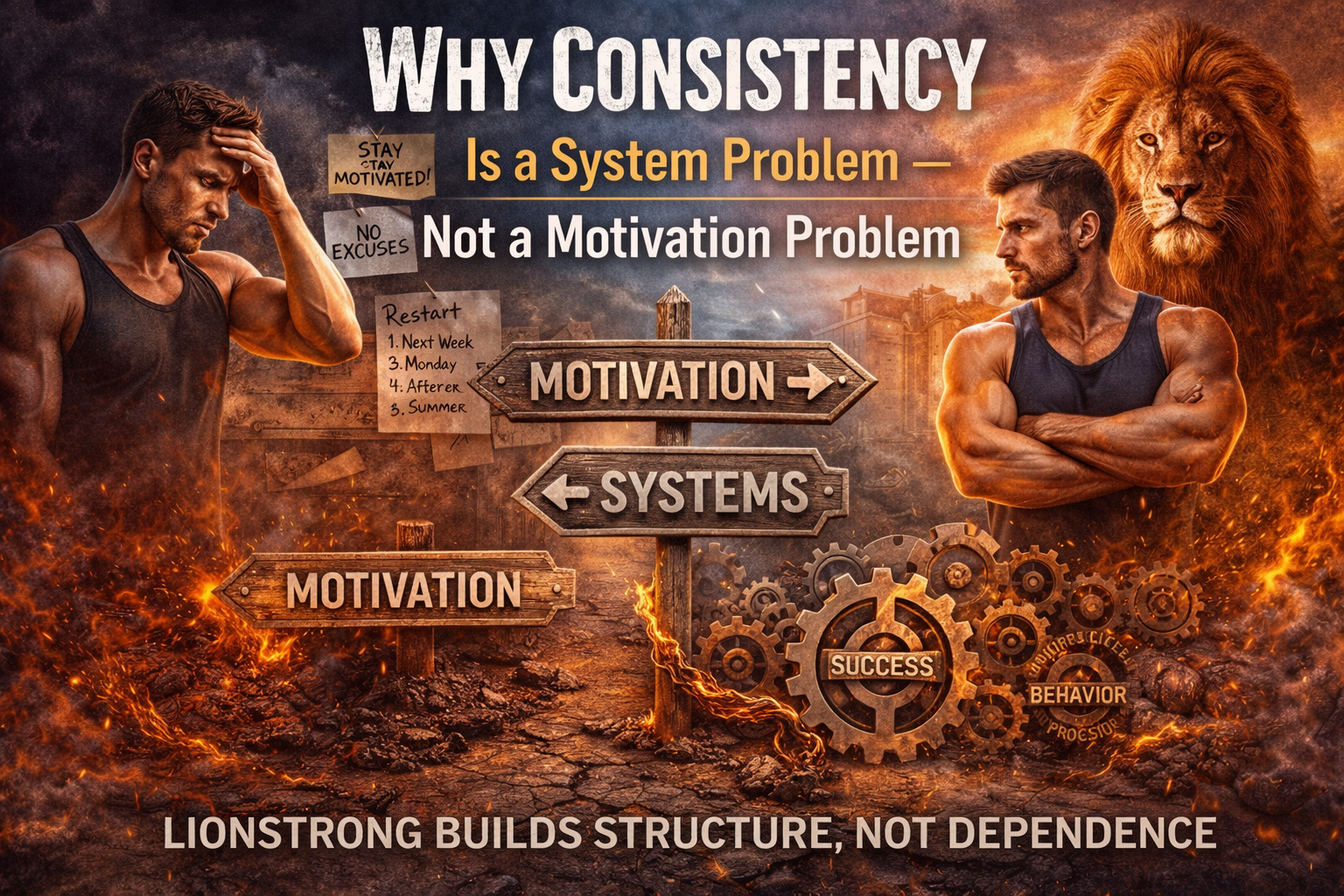
The Lie We’ve Been Told About Consistency
The fitness industry has spent decades blaming people for their lack of consistency.
“You just need more discipline.”
“You need to want it more.”
“You need to stay motivated.”
This narrative is convenient — because it removes responsibility from the system and places it entirely on the individual.
But here’s the truth:
Human behavior is predictable. Systems that rely on motivation are poorly designed.
People don’t fail because they lack willpower.
They fail because the structure they’re given cannot survive real life.
Consistency is not a personality trait.
It’s an outcome of design.
Why Motivation Is an Unreliable Foundation
Motivation is emotional.
Emotions fluctuate.
They fluctuate with:
sleep quality
work stress
family obligations
energy levels
mental bandwidth
Any program that requires you to feel motivated most of the time is statistically guaranteed to fail.
Yet most fitness approaches are built on exactly that assumption.
They demand:
long sessions
frequent decision-making
perfect adherence
constant enthusiasm
That’s not realistic — and it’s not human.
The Hidden Cost of Overcomplicated Fitness
Most people don’t quit fitness suddenly.
They quit gradually.
First, they skip a session.
Then two.
Then they feel behind.
Then they restart — again.
This cycle is created by friction.
Execution friction includes:
excessive time requirements
too many exercise choices
complex nutrition rules
constant tracking
high cognitive load
When friction exceeds capacity, consistency collapses.
Not because of laziness — but because of overload.
Why Consistency Fails Even for “Motivated” People
Highly motivated people fail too.
Why?
Because motivation does not remove friction.
It only masks it temporarily.
Eventually:
novelty fades
life intervenes
stress accumulates
perfection becomes impossible
When the system has no margin for imperfection, it breaks.
Lionstrong was built on the opposite assumption:
People will miss days. Systems must absorb that.
The Lionstrong Principle: Reduce Decisions, Increase Execution
One of the most powerful ways to improve consistency is to remove decisions.
Every decision costs mental energy.
What workout?
How long?
What weight?
What should I eat?
Did I do enough?
Lionstrong systems minimize these questions by design:
time-based training removes rep decisions
dumbbell-based training removes equipment dependency
under-30-minute sessions remove time barriers
framework-based nutrition removes constant planning
When decisions decrease, execution increases.
This is not accidental — it is architectural.
Why Short Workouts Beat Long Ones Long-Term
Long workouts feel productive.
But they demand:
scheduling precision
recovery windows
high motivation
uninterrupted time
Short, high-quality sessions demand less life coordination.
They fit:
before work
after work
between responsibilities
during unpredictable days
This is why Lionstrong prioritizes density over duration.
Not because longer workouts don’t work —
but because shorter workouts survive real life.
Consistency Is Built on Trust, Not Force
People stay consistent with systems they trust.
Trust comes from:
predictable outcomes
manageable fatigue
minimal punishment
visible progress
When training leaves people exhausted, sore, or overwhelmed, trust erodes.
Lionstrong training emphasizes:
controlled failure
sustainable intensity
joint-friendly stress
recoverable effort
This builds confidence, not fear.
Nutrition Fails the Same Way Training Does
Most nutrition plans collapse for the same reason training plans do:
they demand perfection.
Rigid rules create:
anxiety
guilt
rebound behavior
eventual abandonment
Lionstrong nutrition systems are built around:
protein anchors
repeatable meals
cultural relevance
global flexibility
The goal is not dietary obedience.
The goal is nutritional reliability.
Reliability creates consistency.
The Compound Effect of Boring Excellence
Consistency doesn’t feel dramatic.
It feels boring.
And boring is powerful.
Small, repeatable actions performed consistently:
outperform extreme efforts
reduce injury risk
stabilize metabolism
compound results
Lionstrong embraces this reality.
There is no hype cycle.
There is no constant reset.
Just execution — repeated.
Why Most People Don’t Need More Information
Most people already know:
they should train
they should eat better
they should be consistent
Information isn’t the bottleneck.
Design is.
Lionstrong doesn’t give people more to think about.
It gives them less to manage.
That’s why it works.
Final Thought: Systems Succeed Where Motivation Fails
Motivation fades.
Life gets messy.
Energy fluctuates.
Systems endure.
If someone has struggled with consistency, the question is not:
“What’s wrong with me?”
The question is:
“Was the system ever designed to work for my life?”
Lionstrong answers that question honestly.
And that’s why people who commit to systems stop restarting —
and start progressing.